Commercial & Metal Roofing
Standing seam metal and low-slope commercial roof systems built for the way commercial buildings actually get used — foot traffic, rooftop units, and a long stretch between re-roofs.
Get Your Free InspectionA flat or low-slope commercial roof is ponding water in the same spots after every rain, or an aging metal roof has fasteners backing out and seams that no longer sit flush.
What we actually do
- 1
Roof plan reviewed against the building’s rooftop equipment, drainage, and foot-traffic areas before any material is ordered.
- 2
Standing seam metal panels installed with concealed fasteners and factory-formed seams, not exposed-fastener panels that rely on gaskets alone.
- 3
Underlayment rated for the full exposure period the panels will sit under before they’re covered.
- 4
Flashing and penetration details built around every pipe, curb, and rooftop unit individually — these are where commercial roofs typically fail first.
- 5
Drainage checked and corrected at low points instead of just re-covering areas where water already sits.
- 6
Fastener pattern and panel seams matched to the metal gauge and panel profile specified for the project.
How to tell if this is your problem
Ponding water on a low-slope roof more than 48 hours after rain
Fasteners backing out or visibly loose on an existing metal roof
Rust starting at seams, fastener heads, or panel edges
Interior leaks near rooftop units or roof penetrations
A metal roof or membrane past its expected service life for the material
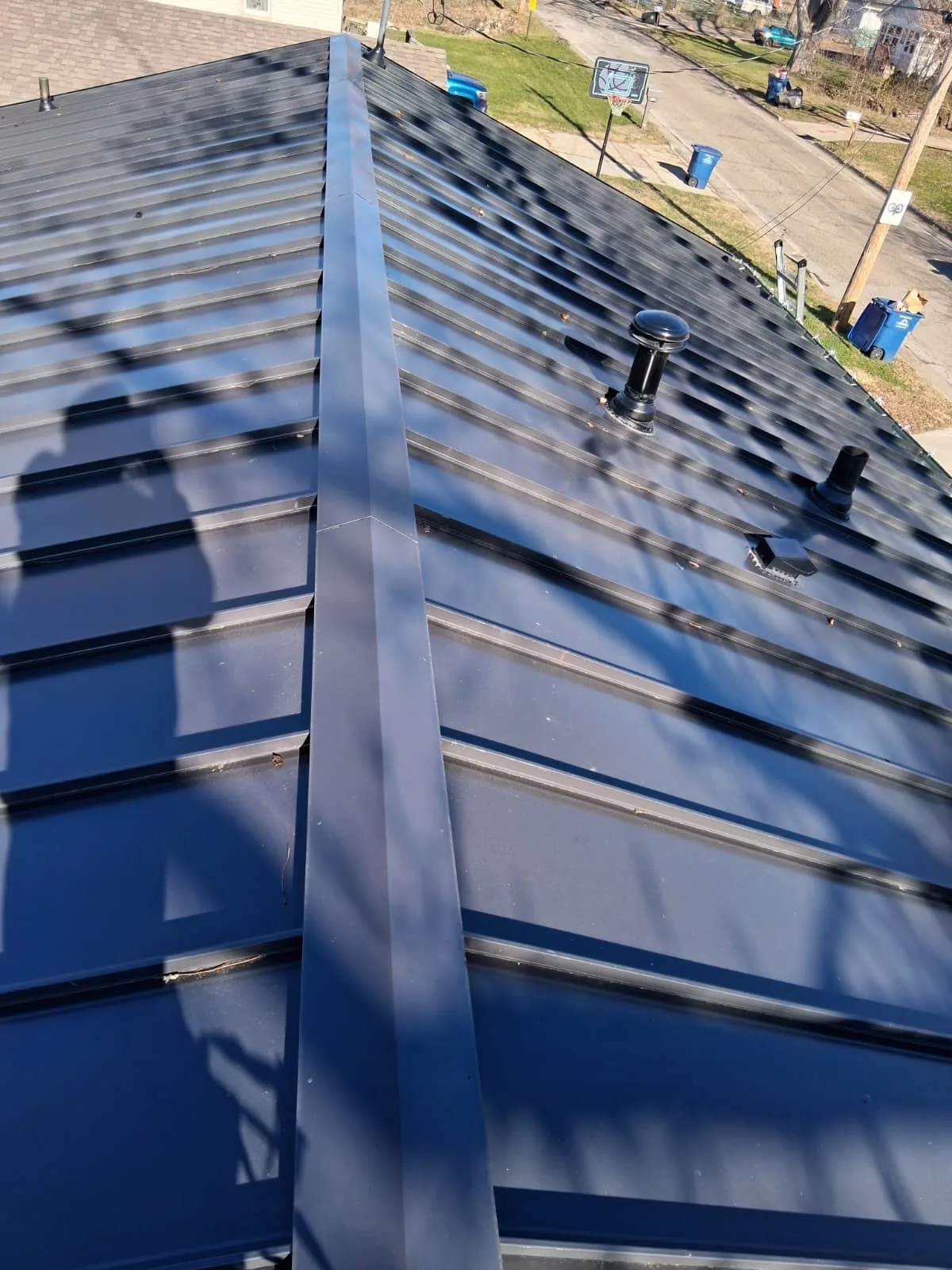
A real photo from a Prime Roofing job — not a stock roof.
Commercial & Metal Roofing FAQ
What’s the difference between standing seam and exposed-fastener metal roofing?
Standing seam panels interlock at concealed seams with no fasteners through the exposed face, so there’s nothing on top of the panel for water to work around over time. Exposed-fastener panels cost less upfront but rely on fastener gaskets staying sealed for the life of the roof, and those gaskets are typically what fails first.
Do you work on low-slope and flat commercial roofs, or only pitched metal roofs?
Both. Low-slope commercial roofs get evaluated for drainage and membrane condition the same way a pitched metal roof gets evaluated for seams and fasteners — the failure points are different, but the inspection logic is the same.
Can a commercial roof be repaired in sections, or does it need to come off all at once?
It depends on where the damage is and how the existing system is fastened. Isolated seam or flashing failures can often be addressed in sections without disturbing the rest of the roof. Widespread fastener backout or membrane failure usually means the whole section needs to come off together so the new material ties in correctly.
Get a free inspection before anything else
We'll walk the roof, tell you what's actually going on, and where commercial & metal roofing fits — or doesn't.
Get Your Free Inspection